Tesla App – Elvee blog

Tesla Phantom Battery Drain

What Tesla phantom battery drain is, why it happens, and how owners can tell the difference between normal standby use and a real issue.

Elvee for Tesla Editorial Team2026-05-109 min read
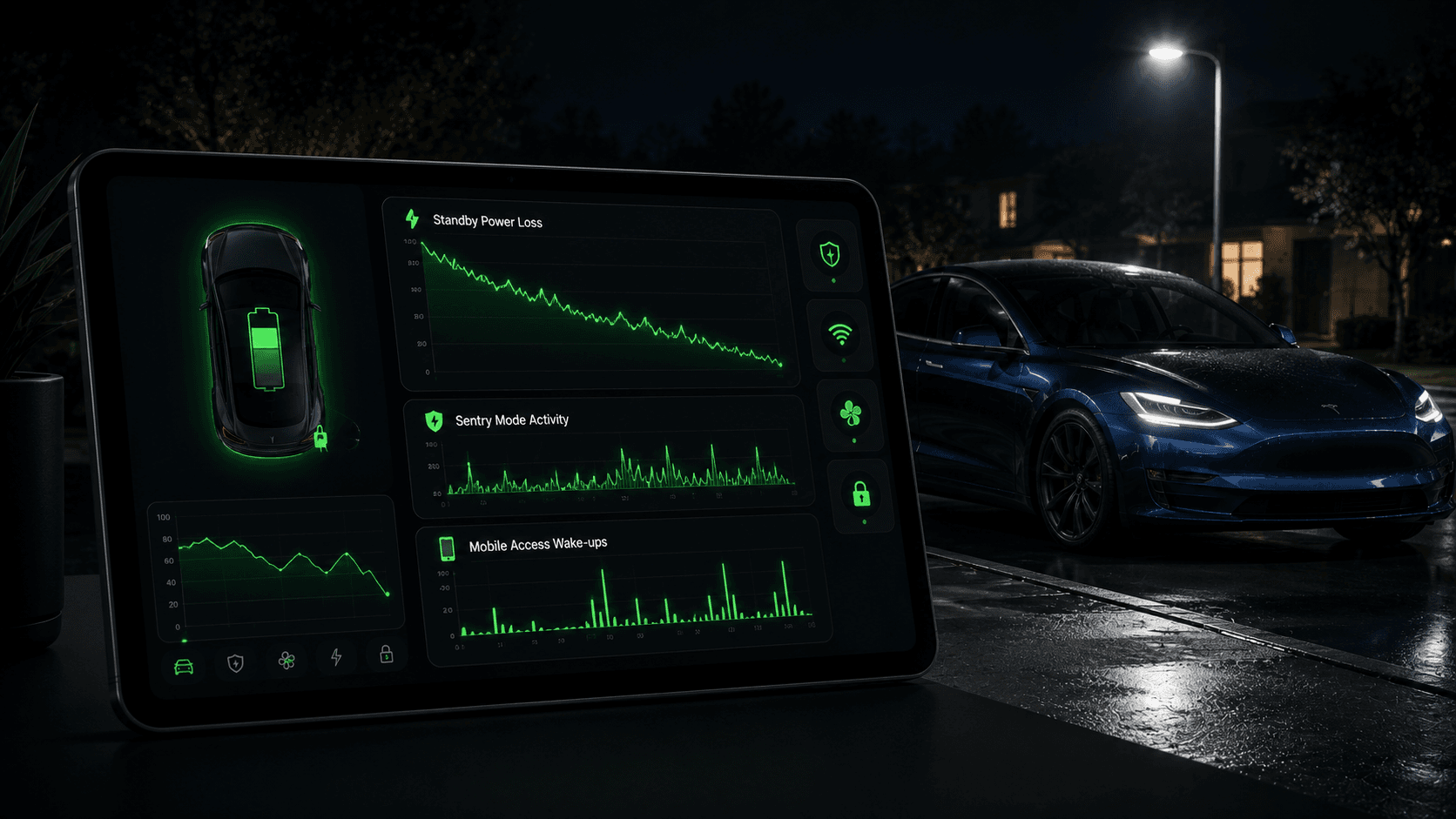
Tesla parked overnight with a subtle glowing battery indicator slowly decreasing in a premium night scene.

Table of contents

What Tesla phantom battery drain means

Phantom battery drain refers to energy the car uses while it appears to be sitting still and unused. In practice, that usually means background systems, wake events, cabin protection features, connectivity, and normal standby behavior.

The phrase sounds alarming, but some parked energy use is expected. The real question is whether the pattern is modest and explainable or unusually high for your settings and routine.

Common causes of phantom drain

Several Tesla features and habits can keep the car more active than owners realize. That does not necessarily mean something is wrong.

  • Frequent app checks that wake the vehicle
  • Sentry Mode or security-related features
  • Cabin overheat protection or climate functions
  • Third-party integrations polling the car

What normal parked battery loss can look like

Normal drain varies by settings, temperature, and how often the car is being woken remotely. A small amount of overnight loss may be completely normal, especially if monitoring features are active.

The important thing is pattern recognition. Owners should compare like with like instead of assuming one parked session defines the whole story.

How owners can reduce phantom drain

The most effective way to reduce phantom drain is to simplify what the car is doing while parked. Many owners get better results by reducing unnecessary wake-ups and checking whether always-on features are truly needed.

  • Limit unnecessary remote checks
  • Review Sentry Mode use case by case
  • Check climate-related parked features
  • Use analytics to compare overnight behavior over time

Tip

If you are testing standby behavior, keep the conditions similar for a few nights so the comparison is meaningful.

When it is worth investigating further

If battery loss becomes unusually high, consistent, or out of character for your settings, it is worth reviewing app behavior, features, and recent changes. The goal is not to panic. It is to isolate what changed.

Common mistakes

  • - Assuming every parked battery drop is abnormal
  • - Changing several settings at once and then not knowing what mattered
  • - Ignoring third-party tools that may wake the car frequently
  • - Comparing one cold night with a mild-weather baseline

FAQ

Is Tesla phantom battery drain normal?

Some parked battery loss is normal because the car still uses energy for standby systems and certain features. The key is whether the pattern stays modest and consistent.

Can checking my Tesla app cause battery drain?

Frequent app checks can wake the vehicle and contribute to extra standby use, especially if repeated often throughout the day.

How can I track phantom drain more clearly?

Track overnight patterns over several similar days and compare settings, wake behavior, and environmental conditions instead of relying on a single observation.

Conclusion

Tesla phantom battery drain is best understood as a pattern, not a mystery. Some standby loss is normal, especially when features and wake events are active.

Owners who compare overnight behavior calmly and consistently usually find the cause faster and avoid unnecessary battery anxiety.

Suggested internal links

Suggested external references

CTA

Need clearer Tesla battery and charging insight?

Tesla App - Elvee helps owners track charging, battery trends, and daily vehicle analytics without turning every metric into noise.