Tesla App – Elvee blog

How Weather Affects Tesla Battery Range

How temperature, wind, rain, and seasonal conditions change Tesla range in real-world driving.

Elvee for Tesla Editorial Team2026-04-2810 min read
Tesla shown across snow, rain, and summer heat in a premium cinematic range-comparison scene.

Table of contents

Why weather changes Tesla range

Tesla range is not a fixed number that behaves the same way in every season. It changes because the battery, tires, cabin systems, and the air around the car all behave differently in different conditions.

Owners often think about range only as a battery issue, but weather also changes the amount of energy needed to move the car comfortably and safely. Cabin heating, cooling, wet roads, wind, and tire performance all play a part.

That is why the best question is not whether weather affects Tesla range. It is how much the change matters in your own driving pattern and what you can do about it.

Why cold weather affects Tesla range the most

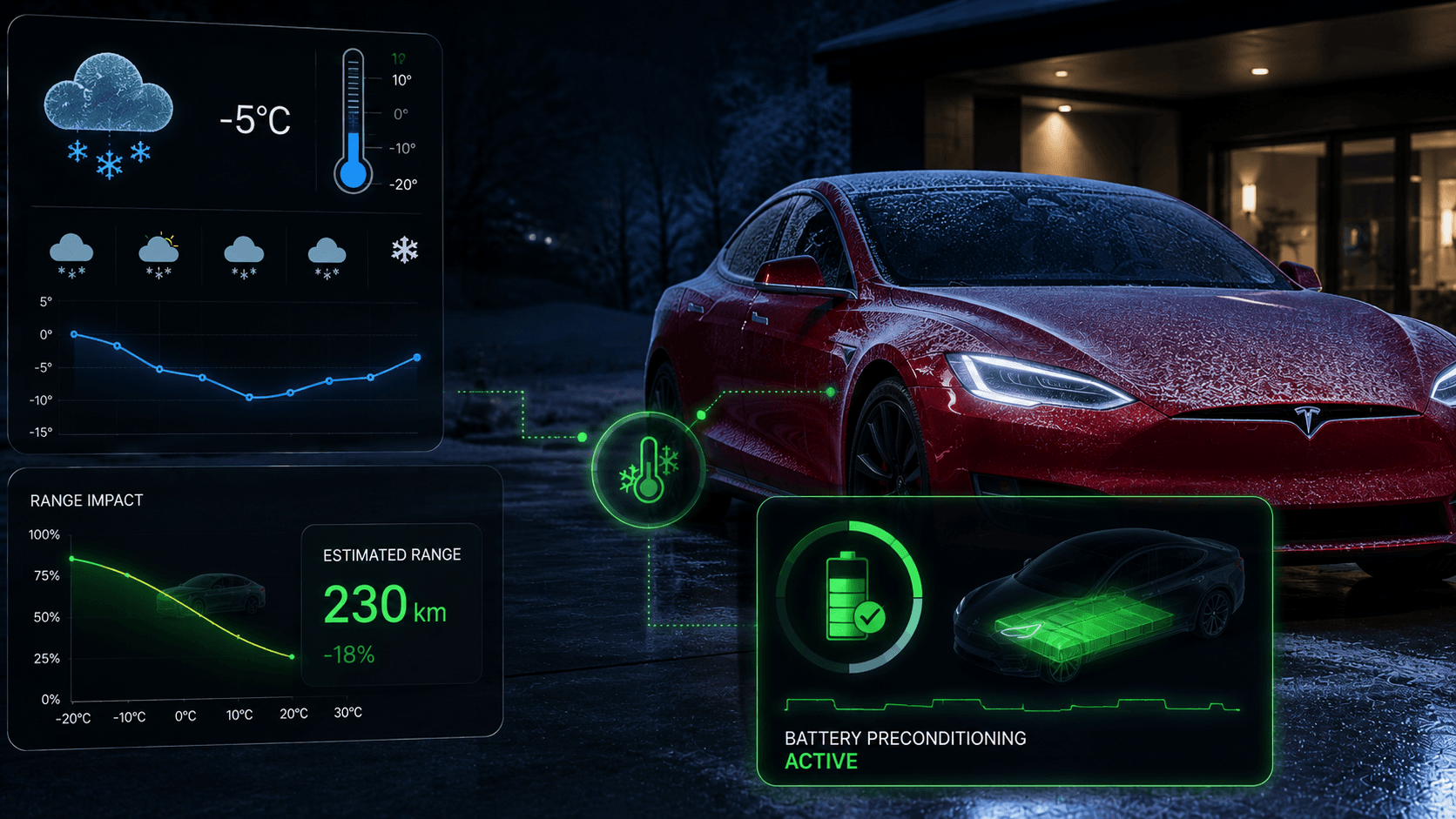
Cold weather is usually the most noticeable range reducer because it affects both battery behavior and energy demand. Batteries are less efficient when cold, and owners also use more energy for cabin heat, defrosting, and seat heaters.

Short trips can make winter range feel even worse because the car spends a bigger share of each drive warming the cabin and battery rather than cruising efficiently.

  • Battery chemistry is less efficient at lower temperatures
  • Cabin heating raises energy use
  • Defrosting and window clearing need extra power
  • Cold tires and denser air reduce efficiency too

Heat, rain, and wind matter too

Summer can also reduce range, although usually in a different way. Air conditioning, high battery temperatures, and faster highway driving during summer travel can all contribute.

Rain and standing water increase rolling resistance, which means the car needs more energy to travel the same distance. Strong headwinds can have a similar effect because the car is effectively working against a constant push of air.

Hot weather

High temperatures can raise cooling demand, especially when the car has been parked in the sun and the cabin needs fast temperature control.

Rain and wet roads

Wet roads create more drag at the tire level, so efficiency often drops even if your driving style stays the same.

Wind and elevation

A strong headwind or steep climb can make a normal route feel surprisingly inefficient. That is not unusual. It is part of real-world EV driving.

How owners can plan around weather changes

The best response to weather-related range changes is not panic charging. It is realistic planning. Owners who understand their seasonal baseline usually feel much calmer because they expect variation instead of treating it as a warning sign.

  • Precondition before leaving when possible
  • Leave more arrival buffer in winter or storms
  • Expect highway efficiency to swing more than city driving
  • Review trends by season instead of day to day

Tip

Compare winter weeks to other winter weeks and summer weeks to other summer weeks. That makes the trend more honest.

Common mistakes when thinking about weather and range

Most range anxiety during seasonal change comes from unrealistic comparisons. Owners compare a cold, windy day to a calm spring drive and assume something is wrong with the car.

Common mistakes

  • - Treating seasonal range change as battery damage
  • - Ignoring wind, rain, or cabin heating when comparing trips
  • - Planning winter routes with summer assumptions
  • - Overreacting to one unusual day instead of watching patterns

FAQ

Does cold weather reduce Tesla range?

Yes. Cold weather often reduces Tesla range because the battery is less efficient and the car also uses extra energy for heating, defrosting, and warming systems.

Does hot weather affect Tesla battery range too?

Yes. Heat can reduce range through cabin cooling demand, battery temperature management, and driving conditions such as faster summer highway travel.

How should I plan trips when weather is bad?

Use a larger buffer, expect lower efficiency, and compare against similar seasonal conditions rather than ideal weather assumptions.

Conclusion

Weather is one of the biggest reasons Tesla range changes from week to week, but that does not mean the car is behaving unpredictably.

Once owners understand the role of temperature, wind, rain, and cabin energy use, range changes become easier to anticipate and much less stressful.

Suggested internal links

Suggested external references

CTA

Need clearer Tesla battery and charging insight?

Tesla App - Elvee helps owners track charging, battery trends, and daily vehicle analytics without turning every metric into noise.