Tesla App – Elvee blog

Tesla Road Trip Planning Guide

A practical Tesla road trip planning guide covering charging stops, range confidence, and how to think ahead without overplanning.

Elvee for Tesla Editorial Team2026-04-2010 min read
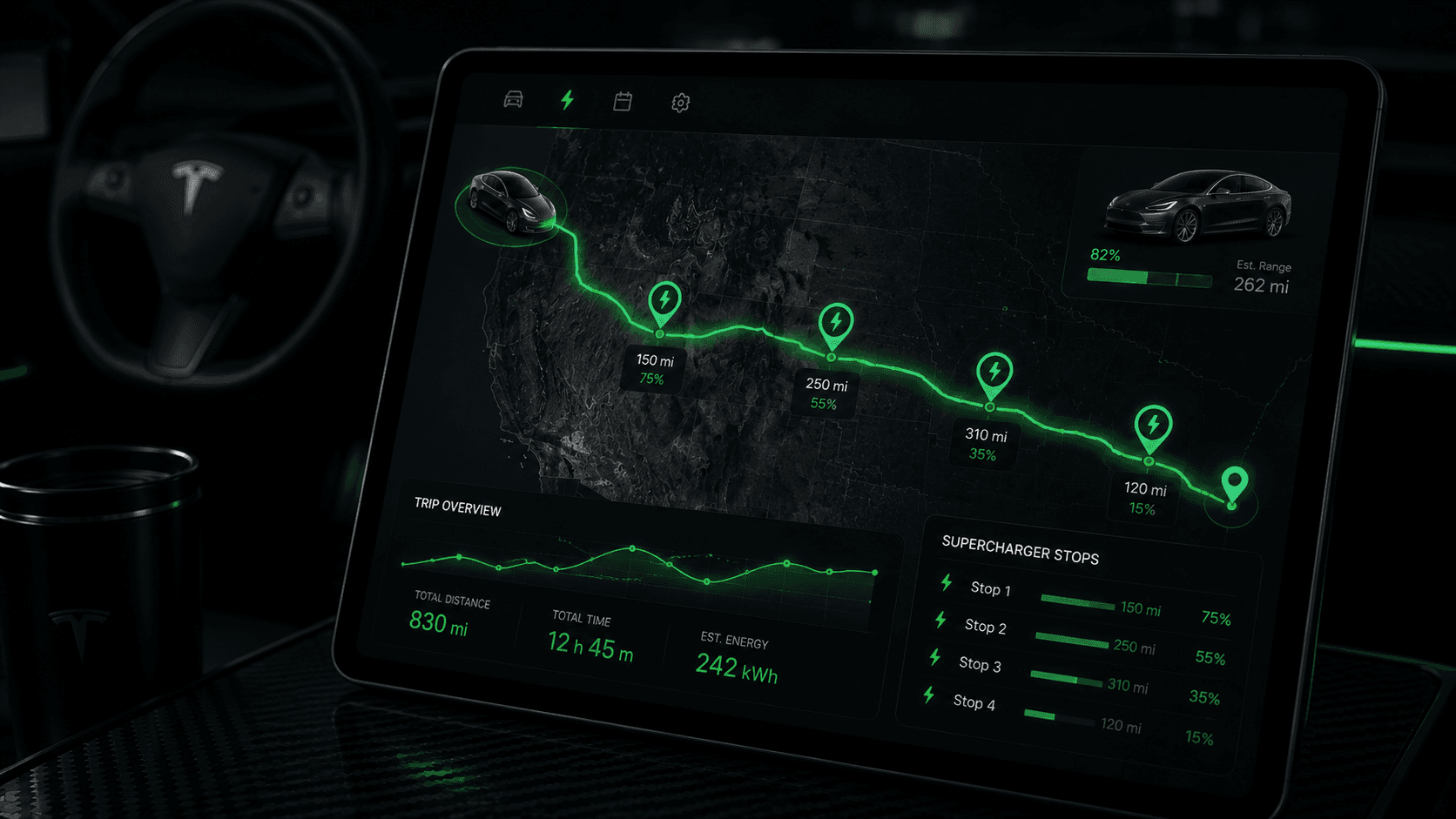
Tesla driving through a mountain road with premium floating charging stop markers in a cinematic road trip scene.

Table of contents

The goal of Tesla road trip planning

Good Tesla road trip planning is not about eliminating every variable. It is about reducing avoidable stress so the trip feels smooth, flexible, and understandable.

Owners usually feel better on long trips when they know where likely charging stops are, what kind of buffer they want to keep, and how conditions could affect efficiency.

What to plan before you leave

Planning ahead gives you a framework, but it should still leave room for adjustment if traffic, weather, or route changes shift the energy picture.

  • Route and likely charging stops
  • Distance between higher-confidence charging points
  • Weather and elevation considerations
  • How full you want the battery at departure and arrival

How to think about range buffer

Range buffer is about comfort and context. Some owners are happy arriving with a smaller margin. Others prefer more breathing room. The right buffer depends on confidence, route familiarity, weather, and charger density.

The mistake is copying another owner's style without considering your own comfort level or driving conditions.

Tip

On unfamiliar routes or in tougher conditions, a larger buffer is usually worth the peace of mind.

Charging stops should support the trip rhythm

The best charging stop is not always the mathematically shortest one. Sometimes a better stop is the one that fits meal timing, rest, traffic flow, or charger reliability more naturally.

Road trips feel easier when charging is integrated into the rhythm of the day instead of treated like an interruption.

Practical example

A stop that lines up with a meal and gives you a stronger next leg may be better than a shorter stop that forces an awkward second stop soon after.

Common road trip mistakes

Most road trip stress comes from unrealistic assumptions, not from the existence of charging stops themselves.

Common mistakes

  • - Planning only for ideal weather and traffic
  • - Leaving too little arrival buffer on unfamiliar routes
  • - Treating every charging stop as a pure speed problem
  • - Ignoring how speed, elevation, and wind change efficiency

FAQ

How do I plan a Tesla road trip?

Plan your route, likely charging stops, expected range buffer, and any major weather or elevation factors. The best road trip planning balances confidence with flexibility.

How much battery buffer should I keep on a Tesla road trip?

That depends on route familiarity, charger density, and comfort level. In more uncertain conditions, a larger buffer is usually the better choice.

Can analytics help after a Tesla road trip?

Yes. Analytics can help owners review charging sessions, trip efficiency, and how real usage compared with expectations, which improves future planning.

Conclusion

Tesla road trip planning works best when it reduces uncertainty without turning the journey into a spreadsheet exercise.

A calm buffer, sensible stop choices, and realistic expectations usually make the biggest difference.

Suggested internal links

Suggested external references

CTA

Need clearer Tesla battery and charging insight?

Tesla App - Elvee helps owners track charging, battery trends, and daily vehicle analytics without turning every metric into noise.