Tesla App – Elvee blog

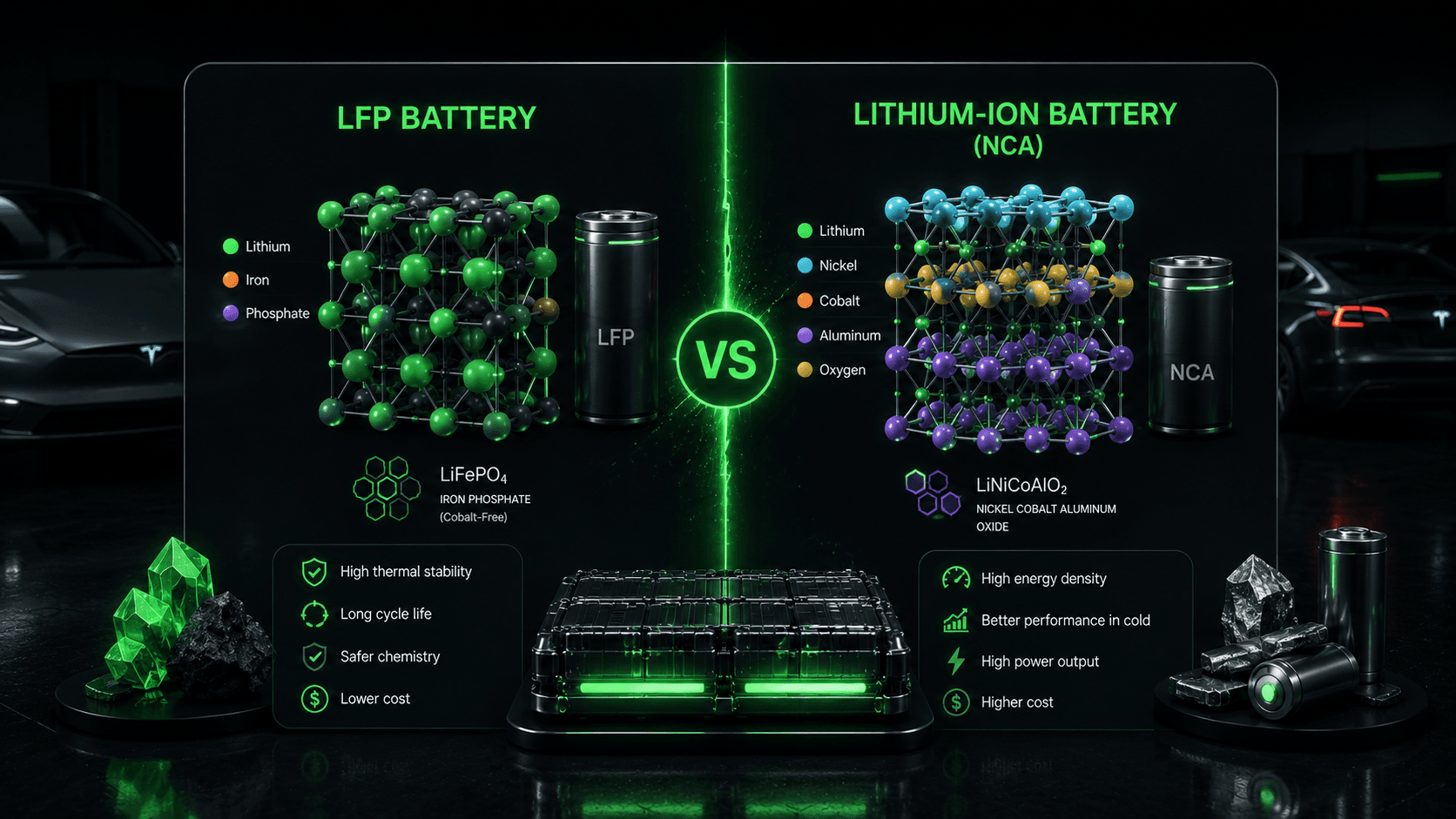
Tesla LFP vs Lithium-ion Batteries

A simple explanation of Tesla LFP vs lithium-ion battery differences and what they mean for charging, range, and ownership habits.

Elvee for Tesla Editorial Team2026-04-0410 min read
Two premium EV battery packs side by side with futuristic comparison lighting and clean technical styling.

Table of contents

Why battery chemistry matters to Tesla owners

Most owners do not need to become battery chemists, but understanding the broad differences between Tesla battery types can make charging routines much easier to manage.

That is because battery chemistry influences how the pack behaves, what charge habits make sense, and how owners should interpret range and battery-care advice.

What LFP means compared with other Tesla lithium-ion packs

LFP stands for lithium iron phosphate, a battery chemistry used in some Tesla vehicles. Other Tesla packs may use different lithium-ion chemistries that behave differently in practice.

For owners, the useful point is not memorizing chemistry labels. The useful point is understanding that charging recommendations can vary depending on which pack the vehicle uses.

Practical differences owners usually notice

  • Charge guidance may differ by chemistry
  • Energy density and range behavior can differ
  • Day-to-day battery routine may not be identical across packs
  • Owner advice should match the vehicle, not generic internet guidance

Charging routine

Charging recommendations for LFP vehicles can differ from recommendations commonly repeated for other Tesla battery chemistries. That is one reason owners should avoid using generic advice without checking what fits their actual vehicle.

Ownership expectations

Some owners care about daily charging convenience, others care more about range or trip planning. Battery chemistry shapes those expectations in subtle but important ways.

Example and common mistakes

Practical example

Two Tesla owners may read the same charging tip online and both think it applies to them, even though their battery chemistries differ. One routine might be sensible for one vehicle and not especially helpful for the other.

Common mistakes

  • - Assuming all Tesla charging advice is universal
  • - Ignoring the owner's manual and chemistry-specific guidance
  • - Comparing vehicles with different packs as if they should behave identically

How analytics can help owners compare patterns more clearly

No matter the chemistry, owners benefit from seeing battery and charging behavior over time instead of relying only on assumptions. That is one reason analytics tools are useful: they make routine patterns easier to observe.

The better your context, the better your decisions around charging and interpretation.

FAQ

What is the difference between Tesla LFP and other lithium-ion batteries?

The difference is battery chemistry, which can affect charge guidance, energy density, and day-to-day ownership behavior. Owners should follow advice that matches their actual vehicle and battery type.

Do all Teslas use the same battery chemistry?

No. Tesla has used different battery chemistries depending on model and configuration. That is why charging advice is not always one-size-fits-all.

Why does battery chemistry matter for charging?

Battery chemistry helps determine which charge habits are most appropriate and how owners should think about routine use and battery care over time.

Conclusion

Tesla LFP vs lithium-ion discussions matter because battery chemistry changes how owners should think about charging and expectations.

The right habit is the one that matches your vehicle, not the loudest generic advice online.

Suggested internal links

Suggested external references

CTA

Need clearer Tesla battery and charging insight?

Tesla App - Elvee helps owners track charging, battery trends, and daily vehicle analytics without turning every metric into noise.